
Since mid-October 2025, the new European Entry/System (EES) has been gradually introduced in Germany. This simplifies the entry process. Passengers will mainly notice the change in the form of significantly faster entry checks. 

EES has been introduced at Hannover Airport Airport since 1 December 2025.
 

Video EES

Since you do not allow cookies, which are necessary for the use of YouTube, we unfortunately cannot show you the element directly on this page.

Accept functional cookies and show this element

Alternatively, you can also open this content directly on YouTube:
Entry Exit System (EES) - Travel to Europe in a new way

Who is affected by the EES?

  • Nationals from non-EU countries staying in the European Union for a short period (up to 90 days within a 180-day period) must complete the new entry and exit procedure.
  • The EES does not apply to EU citizens or citizens of associated Schengen countries (Iceland, Norway, Switzerland, Liechtenstein).
  • Nothing will change for EU citizens and people with a German residence permit. 

What will change?

  • Instead of stamps in passports, entries and exits will be recorded digitally in future. Among other things, personal data, a facial image and fingerprints will be stored.

EES at Hannover Airport

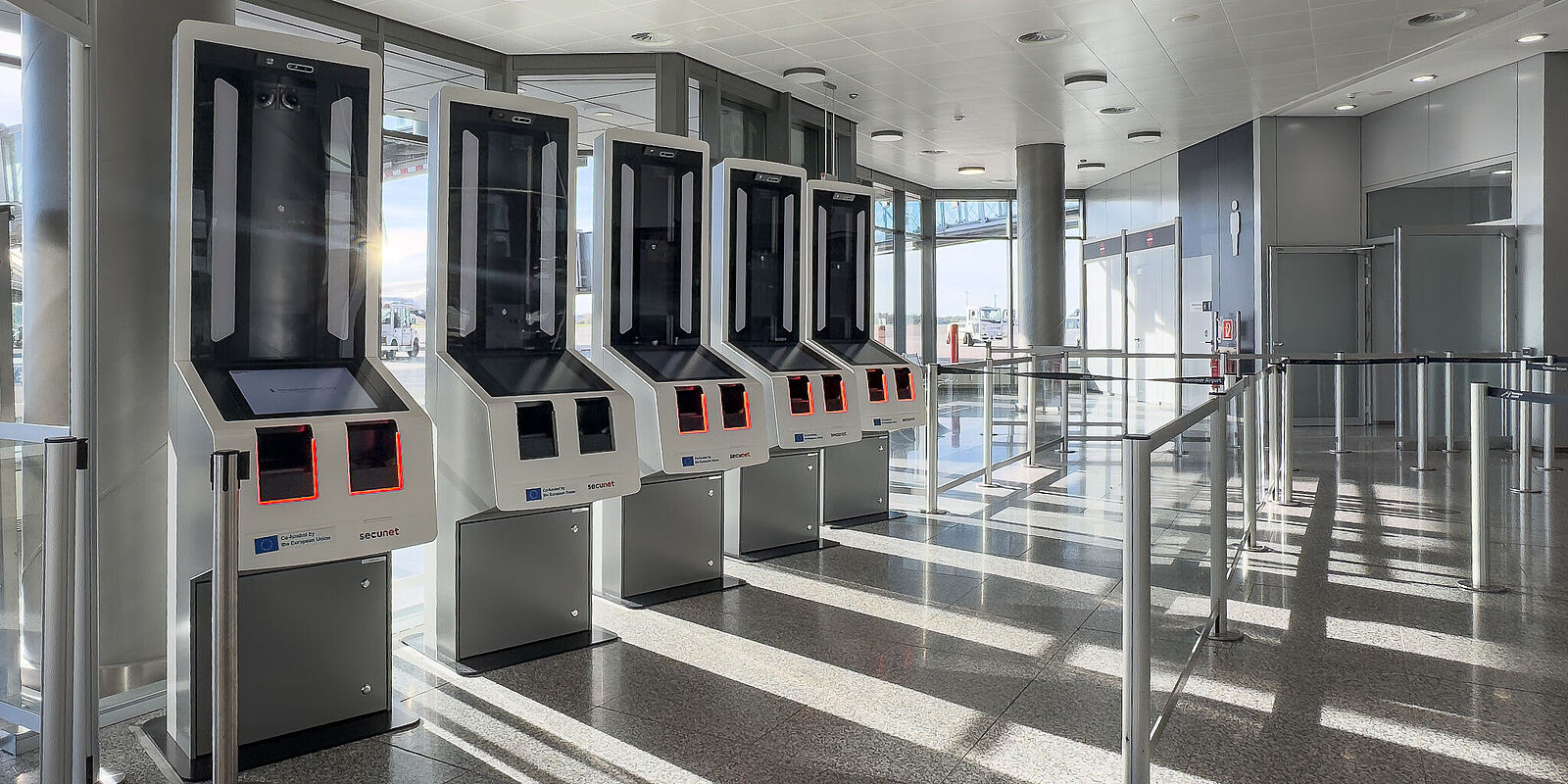
The self-service systems are located on the departure and arrival levels of Terminal C, in the immediate vicinity of the border control counters. The self-service systems are signposted. 


FAQ EES

What is the Entry / Exit System?

(Kopie 1)

The Entry/Exit System (EES) is a new EU-wide system that automatically records when non-EU nationals enter and leave the Schengen area. It replaces manual passport stamping and helps monitor the permitted duration of short stays, ensuring compliance with entry and exit regulations.

To whom does the EES apply?

(Kopie 2)

The EES applies to non-EU nationals entering the Schengen area for short stays of up to 90 days within a 180-day period, provided they do not hold a residence permit or a long-stay visa.

What is the Self-Service System?

Self-Service Systems are automated kiosks located before border control. They allow travelers to scan their passports, provide required travel information, and register biometric data such as fingerprints and a facial image.

Who is not subject to EES registration?

(Kopie 4)

The EES does not apply to EU citizens or citizens of Schengen-associated countries (Iceland, Norway, Switzerland, Liechtenstein). It also does not apply to their non-EU family members who hold residence cards, or to travelers with residence permits or national long-stay visas issued by a Schengen country.


What is the process for EES registration when entering or leaving the EU?

If self-service kiosks are available at your airport, please use them to pre-register your data. There, you will scan your travel information and capture your biometric data. 
After completing this step, proceed to the border control desk for the regular entry process. Border officials will verify your registration and complete the formal entry check.
The same applies when leaving the EU: your exit will be recorded and you may be asked to use a kiosk or go directly to a border control booth.

What kind of passport do I need, to be able to register?

To register in the EES, you need a biometric passport – one that contains a chip storing your personal and biometric data. This is required to use automated systems at border control.

Which information is needed for EES?

(Kopie 6)

The Entry/Exit System records the following information: – personal data such as surname, forename, date of birth, and nationality; – passport number, issuing country, and type of travel document; – biometric data including a facial image and four fingerprints (excluding thumbs);  – travel details such as entry and exit dates, border crossing points, and the duration of your authorized stay

Do non-EU travelers always have to register when entering the EU?

(Kopie 7)

No, if your biometric data was already registered during a previous trip and is still valid (within a 3-year retention period), you do not need to register again. However, each entry and exit is still automatically recorded by the EES.


What happens with my data? Will it be reused/stored?

(Kopie 8)

Your personal data is processed in accordance with the EU General Data Protection Regulation (GDPR). The EES stores your data solely for border control purposes and will not be used commercially. Data is stored for three years, or five years in case of an overstay. Only authorized authorities may access this information.

How does the EES ensure data protection?

(Kopie 9)

The EES is designed in full compliance with EU data protection laws. All personal and biometric data is encrypted, stored securely, and accessible only to authorized personnel under strict legal regulations.

Is it possible to also register my kids and family members?

(Kopie 10)

No, each traveler must register individually, including children. Parents or guardians can assist children with the registration process at self-service kiosks or at manual border control.

Do I have to take off piercings/glasses?

You can keep piercings and glasses on during registration as long as your face remains clearly visible. If the system cannot capture a clear image, border staff may ask you to remove certain items temporarily.


Further information

Bundespolizei

Europäische Union